Lead Isotopes in Archaeology: An Interactive Textbook
This interactive textbook provides learning content for all aspects related to the use of lead isotopes in archaeological research, particularly the reconstruction of the raw material provenance. It combines aspects of geochemistry, archaeology and data science into a holistic approach to this topic. It is an open educational resources, meaning that its content is free and the community is invited to participate in its creation.
Welcome

This interactive textbook is part of TerraLID, the digital research data infrastructure for lead isotope data in archaeology. TerraLID aims to modernise the handling of lead isotope data in archaeological research by providing an modern infrastructure for handling, storing and accessing these data. While working on this infrastructure, it became quickly obvious that beside the infrastructural aspects, a large demand on training in the lead isotope method exists, too. As a result, the idea of this interactive textbook was born.
This textbook aims to provide a holistic approach on how lead isotope data are obtained, used and interpret in archaeological research by combining aspects from geoscience, archaeology, and data science. The target group are all persons with a general background in science and basic knowledge in geosciences and preferably archaeology.
The content of this book mixes text with a wide range of media, such as videos, interactive content, serious games and small embedded application. The guiding principles for work on this book are to make its content available and as accessible as possible without requiring specialised infrastructure, including a collection of print templates and other resources that you will hopefully find useful for, e.g., everyday work in the lab.
This textbook is still work in progress with additional chapters being added over time. We are welcoming any kind of contribution and feedback from our readers and the experts in the field. The current outline of the book is already presented to show what is yet to come and where we would be particularly happy about contributions by the community. If you want to contribute, please contact the editor or fork the associated Github repository and create a push request with your materials.
The team
Editor
Thomas Rose 

Authors
Tim Greifelt

Katrin J. Westner
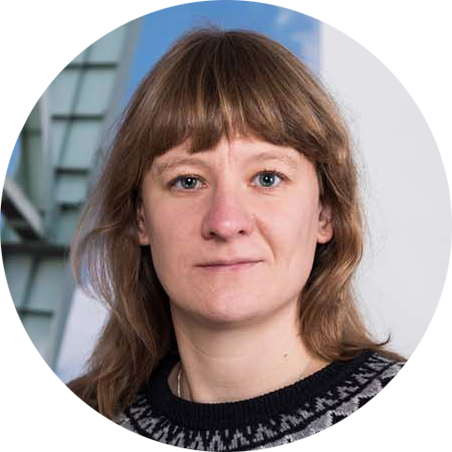
Sabine Klein
Forschungsbereich Archäometallurgie, Leibniz-Forschungsmuseum für Georessourcen/Deutsches Bergbau-Museum Bochum, Bochum, Germany
Institut für Archäologische Wissenschaften, Ruhr-Universität Bochum, Bochum, Germany
FIERCE, Frankfurt Isotope & Element Research Centre, Goethe Universität, Frankfurt am Main, Germany
Yiu-Kang (Gary) Hsu

Institutions
Deutsches Bergbau-Museum Bochum
The Deutsches Bergbau-Museum Bochum – founded in 1930 – is one of eight research museums belonging to the Leibniz Association. It researches, teaches and preserves the history of the mining, processing and use of geo-resources across all of the relevant time periods. Its research areas include: archaeometallurgy, mining history, materials science, and mining archaeology, together with the research laboratory, and the Montanhistorische Dokumentationszentrum.
DMT-Gesellschaft für Lehre und Bildung mbH

The DMT-Gesellschaft für Lehre und Bildung mbH, based in Bochum, is a collective association of the German coal mining industry and acts as the funding organisation of Deutsches Bergbau-Museum Bochum (German Mining Museum) and Technische Hochschule Georg Agricola. It was established as the Westfälische Berggewerkschaftskasse (WBK) in 1864 and merged with the Steinkohlen-Bergbau-Verein (Stbv) and Bergbau Forschung GmbH under the auspices of DeutscheMontanTechnologie e.V. (DMT) in 1990.
Funding
This work has received funding from the German Research Foundation (DFG) through the grants KL 1259/17-1 and WI 5923/2-1 (project number: 524790825).
Version 0.1 has been funded by the German Research Foundation (DFG) through the project NFDI4Earth (NFDI4Earth Educational Pilot, DFG project no. 460036893, https://www.nfdi4earth.de/) within the German National Research Data Infrastructure (NFDI, https://www.nfdi.de/).